
Limelight Replacement Cover Buying Guide: Model-Specific Fit and Foam Options
Posted by HTSS Team on Sep 7th 2026
Limelight Replacement Cover Buying Guide: Model-Specific Fit and Foam Options
Every model in Hot Spring's Limelight Collection has its own exact cover dimensions, and getting a replacement that matches your specific spa matters more than most owners realize until they deal with a cover that almost fits. This guide walks through what to check before ordering a Limelight replacement cover, the foam and material choices worth understanding, and a newer option worth considering if lifting a heavy foam cover has become a hassle.
Why Model-Specific Measurements Matter
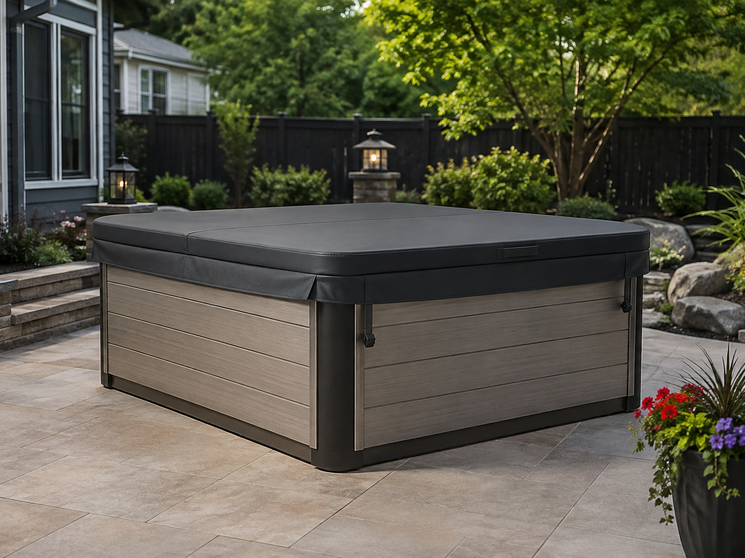
The Limelight Collection spans several distinct models (Flash, Pulse, Beam, Flair, Prism, and others), and each has its own footprint and corner design. A Pulse model, for example, measures roughly 90 by 90 inches with 8-inch radius corners and a 4-inch skirt, while a Flair measures roughly 84 by 84 inches with the same 8-inch corner radius but its own skirt specification. These are not interchangeable dimensions. Ordering a cover sized for the wrong model in the same collection leaves gaps at the seams that undermine the whole point of having a cover in the first place.
Identifying Your Exact Model
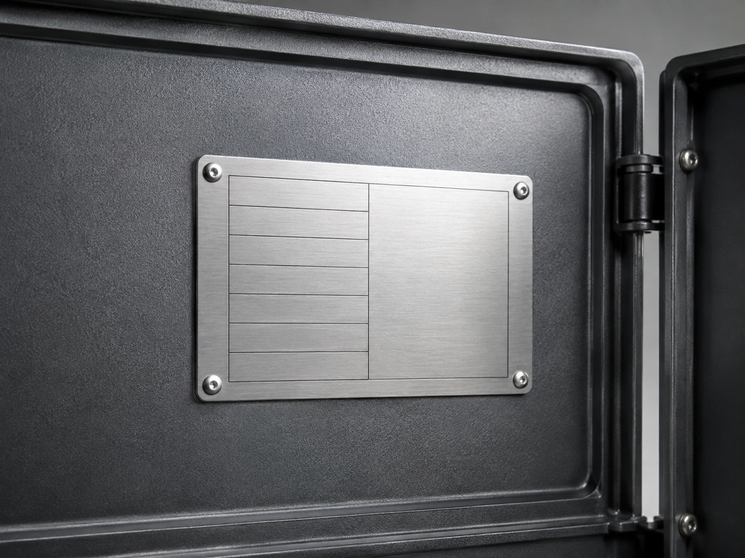
Before ordering, confirm which Limelight model you actually have, since the collection has grown over the years and models have been introduced and updated on different schedules. Check your spa's data plate, typically located inside the equipment access panel, for the model name. If it is unclear or missing, your original sales paperwork or a Hot Spring dealer can usually confirm your exact model from a serial number.
Key Measurements to Confirm
Overall Footprint and Corner Radius
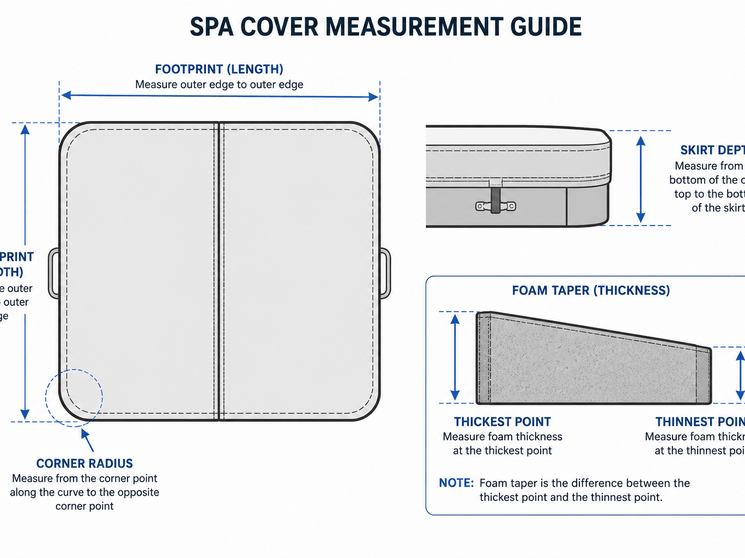
Measure the outer length and width, and note the corner radius carefully. Even models that share the same radius measurement can differ in overall footprint, so do not assume two models with similar-sounding dimensions are actually interchangeable.
Skirt Depth
The skirt is the vertical portion that hangs down the side of the spa, helping block wind and light from getting underneath the seal. Different models use different skirt depths, so confirm this specifically rather than assuming a standard measurement applies across the collection.
Foam Thickness at Center and Edge
Like most quality covers, Limelight-compatible replacements taper from a thicker center fold to thinner panel edges. Confirming both measurements ensures the replacement drains rain and snow properly instead of pooling water in a flat or improperly tapered design.
Choosing Foam Density
Foam density (measured in pounds per cubic foot) determines how well a cover insulates and how long it holds up before absorbing moisture. High-density tapered foam insulation is the standard used in quality Limelight-compatible replacement covers, offering meaningfully better heat retention and a longer service life than lower-density alternatives. If your Limelight spa is in a climate with real winters, prioritizing higher-density foam is worth the modest additional cost, since it directly affects both your energy bill and how many years you get out of the cover before replacing it again.
Traditional Rigid-Foam Versus Rollaway Options
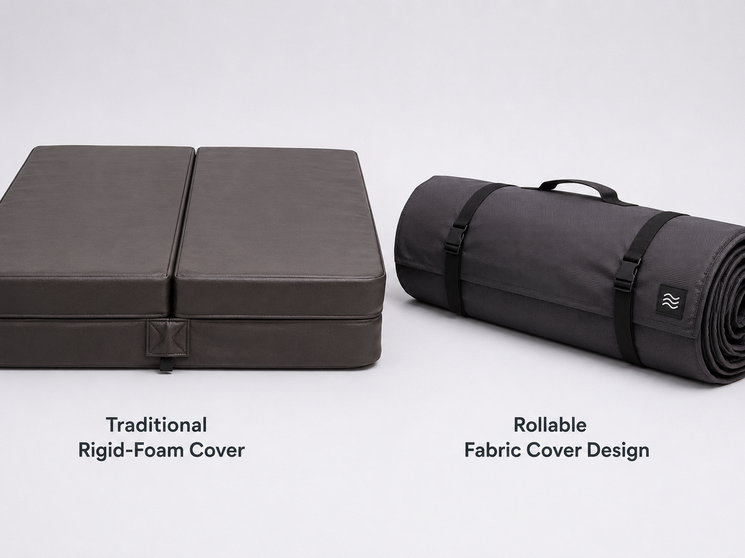
Some Limelight models offer a choice between a traditional rigid-foam cover and a rollaway upgrade using a waterproof material (marketed under names like AquaTEX) that rolls back on a frame rather than folding and lifting off to the side. The rollaway option is designed specifically to let one person open the spa without needing to prop a heavy hinged panel against a wall or railing, which matters if you often soak alone or have limited deck space for a folded cover. The tradeoff is a modest reduction in raw insulation compared to a full-thickness rigid foam core, since the rolled material is inherently thinner. For maximum heat retention, a traditional rigid-foam cover remains the stronger choice; for daily convenience, especially for solo use, the rollaway option is a reasonable trade worth considering.
Why This Matters for Energy Costs
A cover that fits poorly or has begun absorbing water lets meaningfully more heat escape than a properly fitted one, since the water's surface accounts for the majority of potential heat loss on any spa. For a spa used regularly year-round, that difference shows up directly on the electric bill, which makes a properly fitted replacement one of the more cost-effective upgrades a Limelight owner can make relative to its price.
Marine-Grade Vinyl and Hardware
Beyond fit and foam, look for marine-grade vinyl construction with UV protection built in, since Limelight spas (like most outdoor hot tubs) see continuous sun exposure that breaks down lower-quality materials faster than expected. Galvanized steel C-channel reinforcement along the fold and a proper polyethylene vapor barrier around the foam both contribute meaningfully to a cover's real-world lifespan, even though neither is visible from the outside. Locking straps with corrosion-resistant hardware round out the list of features worth confirming before you order.
Warranty Coverage Worth Checking
Most reputable replacement covers carry a multi-year warranty, but the details matter more than the length alone. Coverage against water absorption specifically is the clause worth confirming, since that is the failure mode that ends most covers' useful life well before general wear would. A warranty limited to manufacturing defects alone leaves you exposed to the most common real-world way covers fail.
Extending Your New Cover's Lifespan
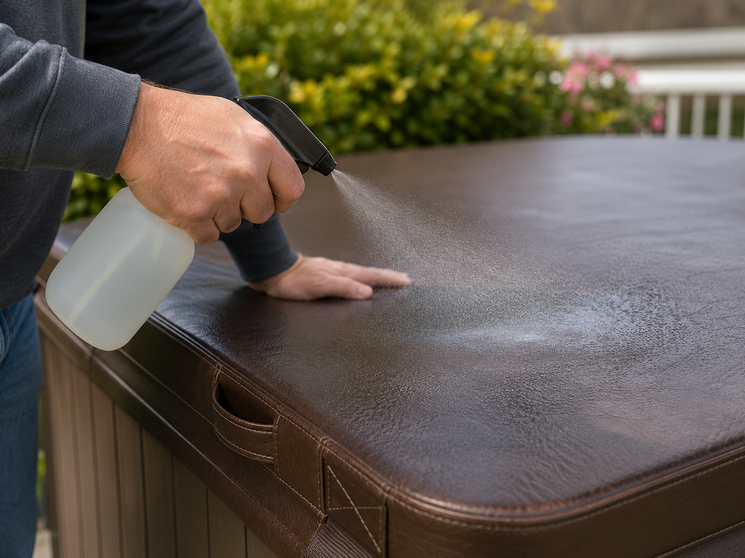
Once you have a properly fitted replacement, a few simple habits extend how long it lasts. Rinse and clean the vinyl regularly with a pH-neutral cleaner made for spa covers rather than household cleaning products, which can strip the protective topcoat that gives the vinyl its water repellency and UV resistance. Apply a vinyl protectant periodically, especially if your Limelight spa sits in direct sun for much of the day. Address any small tear or zipper issue immediately, since a minor problem left unaddressed gives water a direct path into the foam core, where it does the most lasting damage.
Ordering Timeline
Replacement covers for a specific Limelight model are typically made to order rather than kept in generic stock, which means real production and shipping time, often several weeks depending on the manufacturer. Order as soon as you notice meaningful degradation in your current cover rather than waiting for a complete failure, since running the spa uncovered or under a failing cover for weeks while a replacement is produced defeats much of the purpose of replacing it in the first place.
Measuring Tips to Avoid a Mismatched Order
If your existing cover is still close to its original shape, it is generally the easiest and most accurate reference for ordering a replacement. If it has visibly warped, sagged, or shrunk from years of moisture exposure, measure the spa itself at the top of the cabinet instead, since a degraded cover is no longer a reliable size reference even if it still technically fits.
Frequently Asked Questions
Are covers interchangeable between different Limelight models?
No. Each model has its own specific dimensions and corner radius, so a cover made for one Limelight model will not properly fit a different model, even within the same collection.
How do I find my exact Limelight model if the data plate is worn?
Check your original sales paperwork, or contact a Hot Spring dealer with your spa's serial number, which they can typically use to confirm the exact model and year.
Is a rollaway cover a downgrade in insulation compared to a traditional foam cover?
It is somewhat less insulating due to its thinner profile, but it offers real convenience for one-person operation. Whether that tradeoff makes sense depends on how much you prioritize maximum heat retention versus daily ease of use.
What foam density should I choose for a cold climate?
Higher-density foam provides better insulation and a longer service life in cold climates with real winters. It costs somewhat more upfront but generally pays for itself in reduced heating costs and a longer cover lifespan.
Can I measure my own spa accurately without professional help?
Yes, in most cases. Careful measurement of the outer footprint, corner radius, skirt depth, and foam thickness is something most owners can do themselves with a tape measure, as long as the process is followed carefully and checked twice before ordering.
How long should I expect a new Limelight cover to last?
With regular cleaning, periodic protectant application, and prompt repair of small damage, a well-made cover typically lasts several years before foam degradation or vinyl wear justifies another replacement.
How far ahead should I order a replacement cover?
As soon as you notice real wear, ideally before your area's coldest season, since custom covers are made to order and take genuine production time rather than shipping same week.
A properly fitted Limelight replacement cover comes down to confirming your exact model, measuring carefully rather than estimating, and choosing a foam density and construction quality suited to your actual climate. Get those details right, take reasonable care of the vinyl afterward, and your new cover should perform well and hold up for years before this decision needs to come up again.